Exploring the anti-inflammatory properties of gac superfruit
11/30/-0001 / By Evangelyn Rodriguez
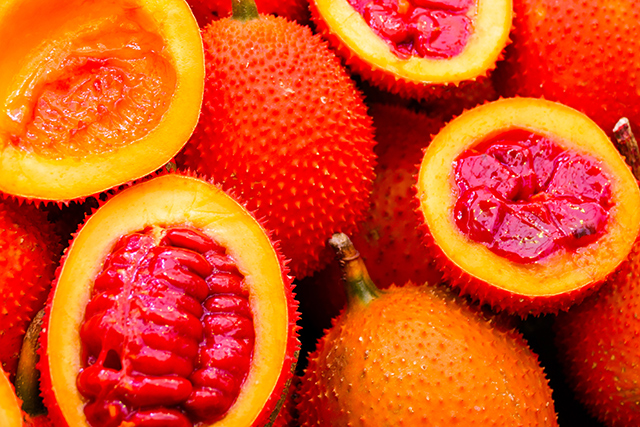
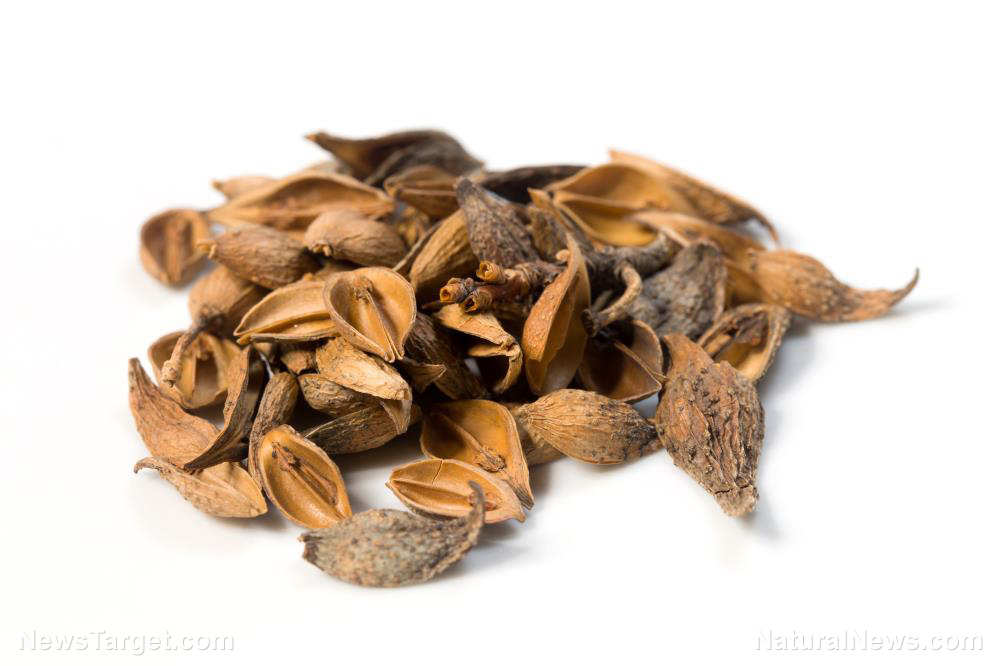
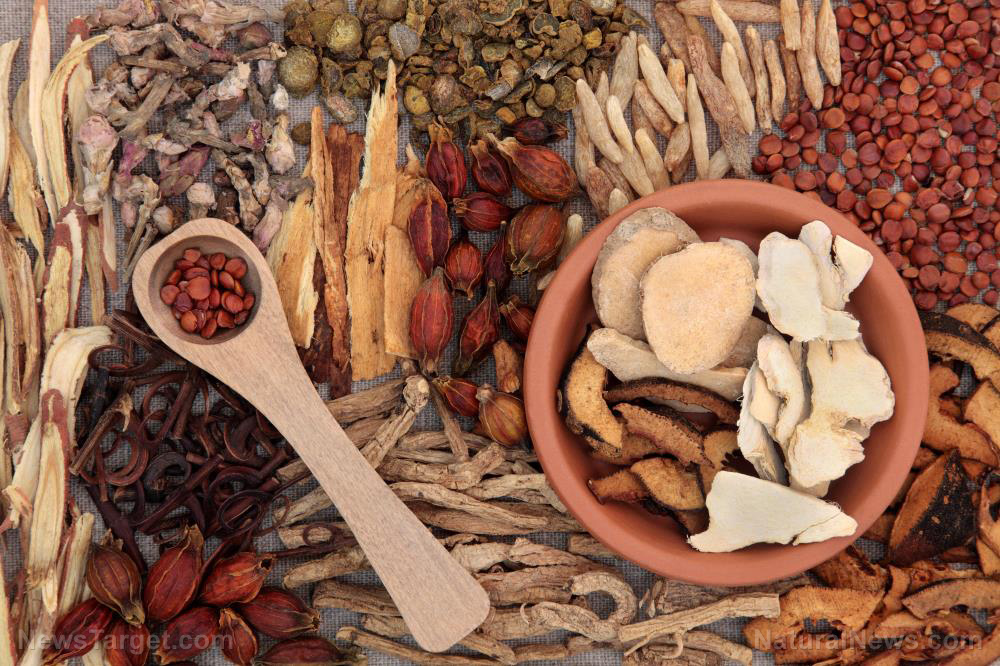
Gac (Momordica cochinchinensis) is a fruit indigenous to Southeast Asia and highly valued for its nutritional and medicinal uses. Its seeds are used in traditional Chinese medicine to treat a variety of ailments including boils, rheumatic pain, muscle spasm, hemorrhoids, and hemangiomas. In a recent study published in The American Journal of Chinese Medicine, researchers from Sungkyunkwan University in South Korea investigated the chemical properties and biological activities of extracts derived from gac seeds. They also evaluated and compared the anti-inflammatory effects of the saponins found in those seeds.
Gac fruit and its health benefits
Gac is a bright-red fruit that has a mild taste. Every part of it is used for medicine in countries that cultivate it, such as China, Thailand, and Vietnam. Gac fruit has been reported to have these health benefits:
- Anticancer
- Treats anemia
- Lowers cholesterol levels
- Prevents heart disease
- Improves eyesight
- Antidepressant
- Prevents aging
- Treats prostate enlargement
In traditional medicine, gac fruit is used to treat swelling, tinea (fungal infections), diarrhea, and other skin infections. Gac seeds are also good for liver and spleen disorders, as well as wounds, bruises, swelling, and pus. Its oil strengthens the stomach and improves eyesight. It can also be used to restore appetite, reinvigorate the body, treat burns and sores, and, together with antibiotics, address acne problems. As for its roots, they are believed to activate blood circulation, promote urination, and treat rheumatism, inflammation, swelling of the legs, and edema.
Gac seed extracts contain anti-inflammatory agents
The seed membrane of gac fruit (Momordicae Semen) is a rich source of carotenoids, such as lycopene and beta-carotene, and tocopherols. Lycopene and beta-carotene are both plant pigments and are known antioxidants. To analyze the other bioactive components of gac fruit seeds, the researchers prepared seed extracts using ethanol as extraction solvent. They identified three triterpenoidal saponins (1–3) from the extracts and used them on RAW264.7 (murine macrophage) cells induced with lipopolysaccharide (LPS) to assess their anti-inflammatory activities. LPS is a component of the outer membrane of gram-negative bacteria. Once it is recognized by immune cells, LPS triggers a cascade of immune responses that leads to inflammation.
Inflammation is a consequence of the activation of several intracellular signaling pathways. These include the IkappaB kinase (IKK)–nuclear kinase-kappa light chain enhancer of activated B cells (NF-KB) pathway and three mitogen-activated protein kinase (MAPK) pathways. Mitogens – proteins that induce cell division – that activate the MAPK pathways are extracellular signal-regulated kinases (ERK) 1 and 2, c-Jun N-terminal kinase (JNK), and p38. Activation of these signaling pathways results in the activation of transcription factors, such as NF-KB, which enable genes encoding inflammatory mediators to be expressed. (Related: The top 7 anti-inflammatory foods to consider adding to your diet.)
Among the three saponins identified by the researchers, compound 3 (momordica saponin I) reduced the production of nitric oxide (NO) in LPS-activated RAW264.7 cells. NO is a signaling molecule that gives an anti-inflammatory effect under normal physiological conditions. However, under abnormal conditions, NO is overproduced and induces inflammation.
Besides reducing NO production, momordica saponin I also decreased the mRNA levels of inducible NO synthase (iNOS) and cyclooxygenase (COX)-2. iNOS is an enzyme that produces NO while COX-2 is an enzyme that produces prostaglandin, a promoter of inflammation. Momordica saponin I also showed an inhibitory effect on the translocation of the subunits of NF-KB (p65 and p50) into the nucleus. Moreover, momordica saponin I decreased the phosphorylation levels of inflammatory signaling proteins (IKBA, Src, and Syk), which are known to be upstream regulatory molecules of p65.
Based on these results, the researchers concluded that momordica saponin I in the seeds of gac fruit is a bioactive immunomodulatory agent that is beneficial in treating inflammatory diseases.
Sources include:
Tagged Under: alternative medicine, anti-inflammatory, disease treatments, food cures, food is medicine, food science, functional food, gac fruit, gac seeds, inflammation, inflammatory diseases, Momordica cochinchinensis, natural cures, natural medicine, prevention, remedies, research, saponins, TCM, traditional Chinese medicine